Or, How to Reasonably Get Something Off Your Chest
I think it was Goethe who said something like “old men speak less because they’ve already heard and said it all.” Don’t look for a footnote here because old men have also had it “up to here” with having to attribute everything they’ve ever learned. Nevertheless, it is incumbent upon us from time to time to say something. This can make us cranky, and it is exactly the challenge of relating something that I would deem axiomatic, but may be news to others, in a way that is somewhat cordial and represented by the vox orbis terrarum. It is this last requirement, one that must stand in comparison always to Edward Gibbon’s Decline and Fall of the Roman Empire, that I suppose keeps us looking over our shoulder, but can feel to the experienced among us like a nervous tic. The footnote, in support of what seems obvious, feels like wearing a helmet on a bicycle: overdoing it, inviting disaster, but once you disparage it sure to become your nemesis.
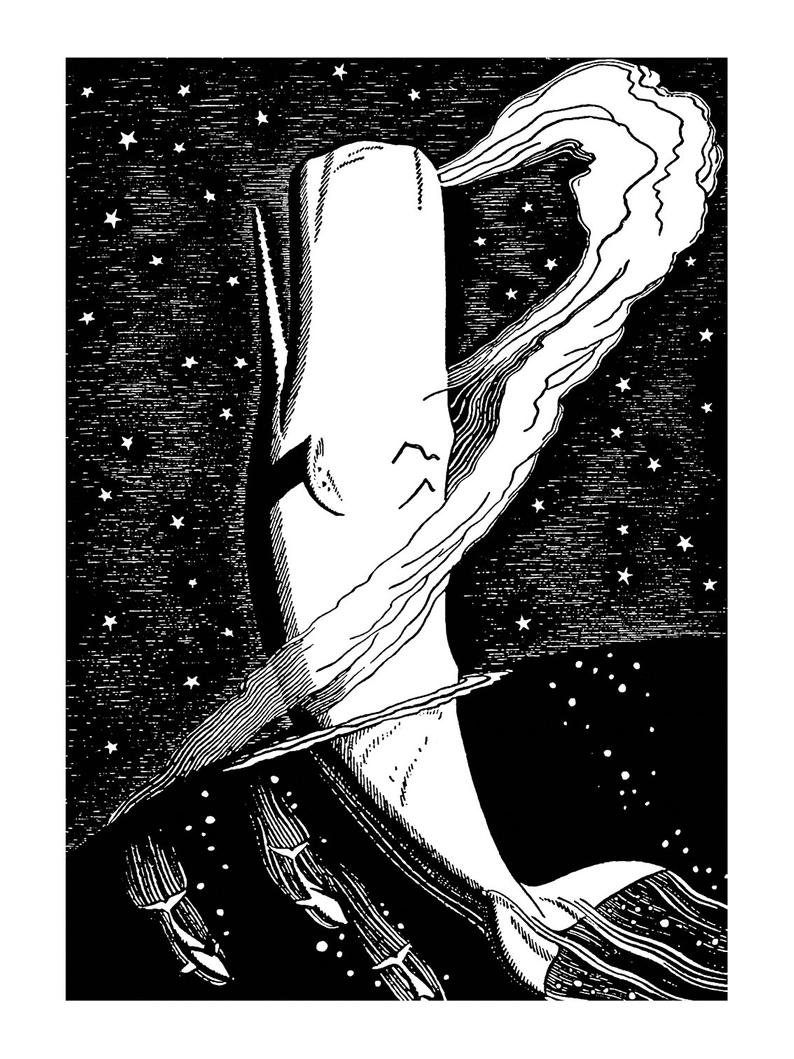
And so we begin to scratch an itch. My field has been that of classical instruction in secondary schools for the past decade and a half, where before I was a professional opera singer layered on top of a repentant video game designer. I have lived through a sea change in private education, seeing more parents decide not to send their children to school at all unless it can be shortened to the least intrusive of office visits, allowing the children to stay home more, I suppose to churn butter, work on scrimshaw, or something. Where before we made the argument on the quality of education, we now seem to be forced to argue for convenience. It is hard to not take this personally, as I’m sure travel agents, paralegals, and research librarians must feel as the internet reaper comes for them in their own time. Incidentally, fewer and fewer people come to operas too. So, we must write in a reasoned and winsome way, wrestling with our own antisocial inner Ahab, but fairly quickly, since the essay itself may be becoming extinct. We don’t want to be technical, but we want to be interesting to our neighbors, perhaps of use.
Sources…
How do I know what I need to research? Some questions to be investigated are the peculiarities (if I dare not say novelties) that are introduced by the American experience, itself descending from a post-Reformation founding. An overview of available popular and scholarly work on American social experience over 250 years is helpful, because we are trying to understand what has led to our moment.
Classical teachers believe in the universal statement, the perennial philosophy. We are skeptical that anyone really ever says anything new at all. Therefore, classical sources are the ones that endure: We go to Plato, Aristotle, Hugh of St. Victor, Comenius and many others for our axioms: the necessity of corporate, in-person education. This is classical anthropology. Why have children gone to school for millennia? This is a philosophic question, and in the classical authors the answers seem inevitable. (They never had to support their conclusions with accessible research). Additional helpful sources are more modern voices reflecting on the same classical sources you are.
Where do I find sources? Good news for us today: All the old books are lying around on the internet. We no longer have to make a long pilgrimage to a scriptorium lying beyond a desert. Internet Archive, a website called “Forgotten Books”, and the old “Great Books” series are a great starting place. Lying in plain sight means we tend to overlook these things, which can also add to the feeling that we are saying something axiomatic, something that everyone knows. This is an illusion. Things once obscured only seem obvious once brought back.
How do I know if a source is credible and appropriate for my project? The goal is to resurface the wisdom of the ancients. The credibility of the old teachers is quite high. They stand at the end of epochs, and at the head of our own. For example, when studying the application of rhetorical forms in antiquity, we realize that people have been applying those methods since at least the fifth century. Since this is a cultural argument we are making here, additional current insight can be found on the web. Think tanks and agencies publish data from the 2000s on attendance, demographics, household composition, etc. These have the credibility of near eyewitness level.
How do I incorporate sources into my writing? Typically, for a piece on the internet, I would sacrifice footnotes for flow, and allude to ideas or authors from antiquity, only mentioning more recent writers with inline introductions and explanations of significance. When pressed, I have been in the habit of using Turabian, because most of the old dusty books I rummage around in use that format, and they’re usually in endnote format. I’m worried that scholarly paper writers are writing for a diminishing and uninterested audience.
Where can I find more information? If you are interested in the place of education in the western world, I can recommend H.G. Good’s A History of American Education, which provides a textbook approach (last version 1973) to the overview of education thus far. These kinds of books lay out many avenues of research. To follow the latest, you can read Pete Hegseth’s Battle for the American Mind, which will give you a classical education partisan’s retrospective on failing American education. I ran into Ivan Illich (1926-2002), whose Deschooling Society looks like the beginning of an intriguing critique. I’ve only begun to scratch the surface.
Leave a Reply