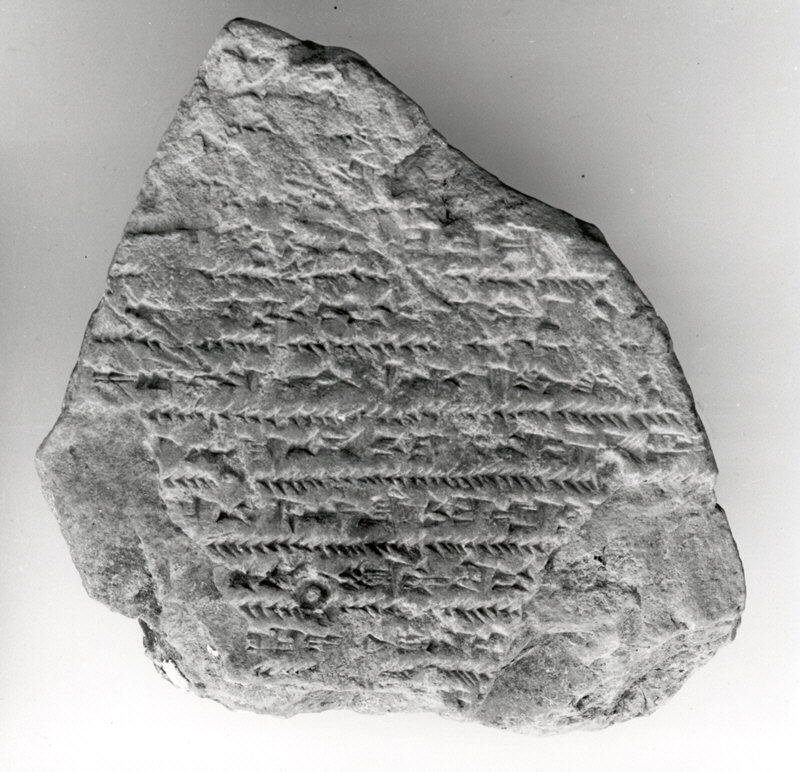
The Mesopotamian scribes who kept the Edubba — the “tablet house” — running four thousand years ago already knew the argument we are still having. The teacher, one student remembered, “guided my hand on the clay, kept me on the right path”: training for a trade, but also, unmistakably, a shaping of the person doing the trade. Soul or skill. Formation or function. The question is old enough that Plato could treat it as settled and still be proven wrong about that.
Education is not “the filling of a vessel” but “the turning of the eye of the soul towards the light.”
Plato, Republic VII
Augustine picked up the same thread three centuries later and called it repair: the image of God in us not erased by the Fall but “deformed and discolored,” recoverable only by the one who first formed it. Hugh of Saint Victor went further, teaching that every art — even the mechanical ones — exists to restore what Adam lost. Then Francis Bacon took Augustine’s own language of restoration and split it in two: the soul became religion’s business, and the arts and sciences were left to recover our dominion over nature instead. Everyone since has had to decide which half of that fork to stand on.
I put together a longer, footnoted version of this argument — twenty figures, four thousand years, from the Edubba to John Dewey — tracking soul-formation and social utility as two threads, and dominion over creation as a third that Bacon’s split set running on its own. It ends where we still are: “classical, formation-centered schooling versus outcomes-driven standards” is not a new fight. It is the oldest fight in the field, wearing this century’s clothes.
Read the full timeline: The Turning of the Soul — A History of Western Educational Theory.
Leave a Reply